
This is about the distribution of talent in the world. It’s mostly a story in pictures. The data and images all come from the toy app that I vibe-coded – it’s pretty fun to click around, feel free to go try it and see what interesting stories you can unearth. Note that I cite all the sources for my data in the app, so I won’t do so here.
Geography1
In each map, blue represents teams that are active; bright red for the teams that were eliminated in the prior round; and dark red for teams that had been eliminated in earlier rounds.
ELO Ratings
ELO ratings are a numerical measure of team strength, updated after every match. A win against a strong opponent earns more points than a win against a weak one; losing to a stronger side costs fewer points. The higher the number, the stronger the team. Note: the ratings shown here are a pre-tournament snapshot and do not reflect results from the tournament itself.
GDI (Group Difficulty Index) = Mean ELO − Std Dev. A higher GDI means a tougher, more evenly matched group; a lower GDI means one strong team with weaker opposition. Basically this is a half-assed attempt to quantify the relative strength of a collection of teams.
Talent Distribution
Group Stage
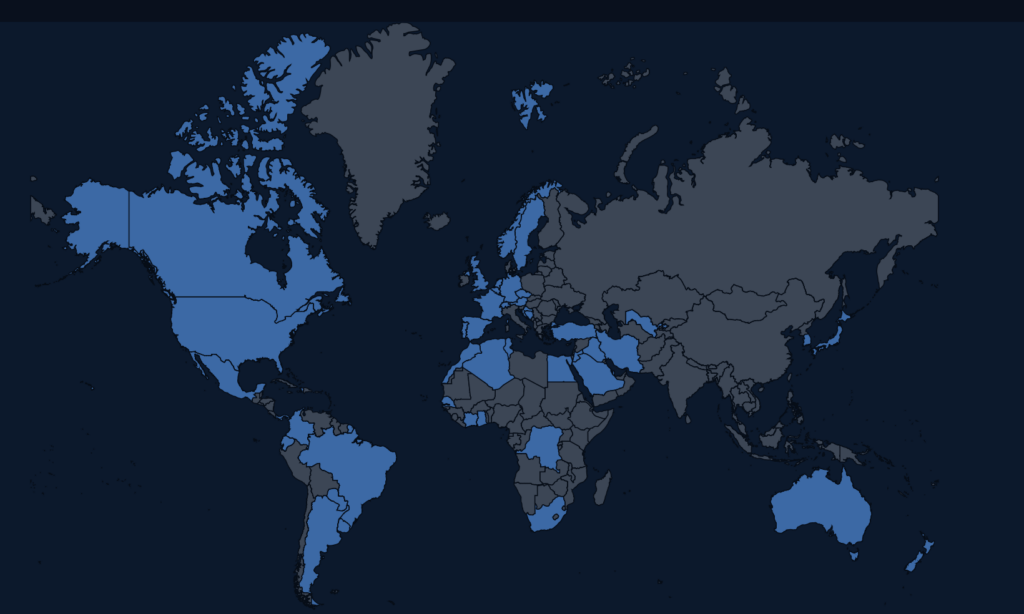

Round of 32
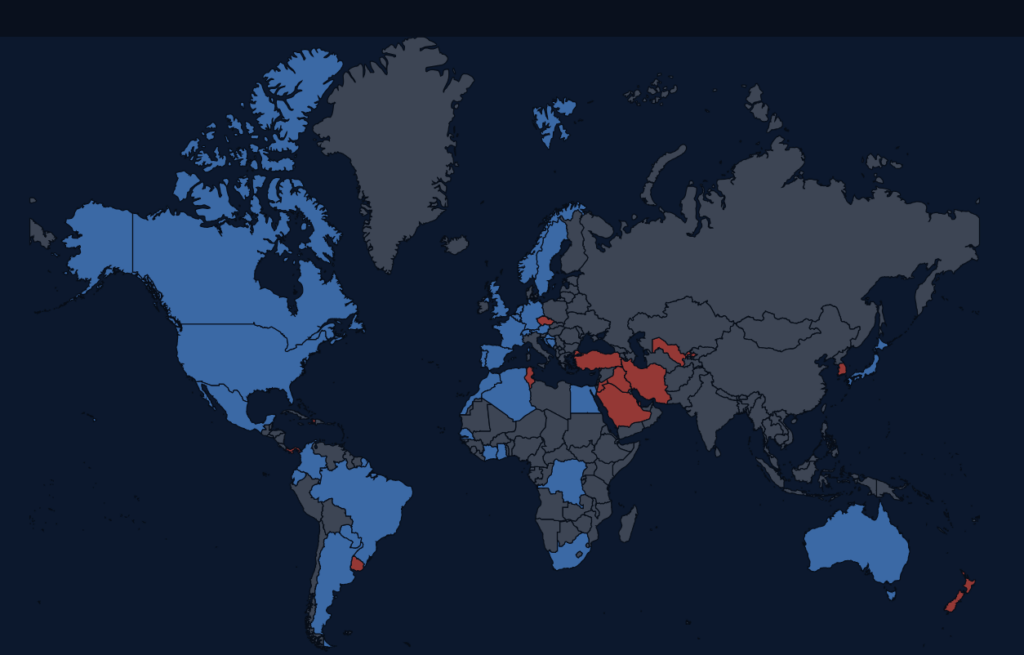

Round of 16
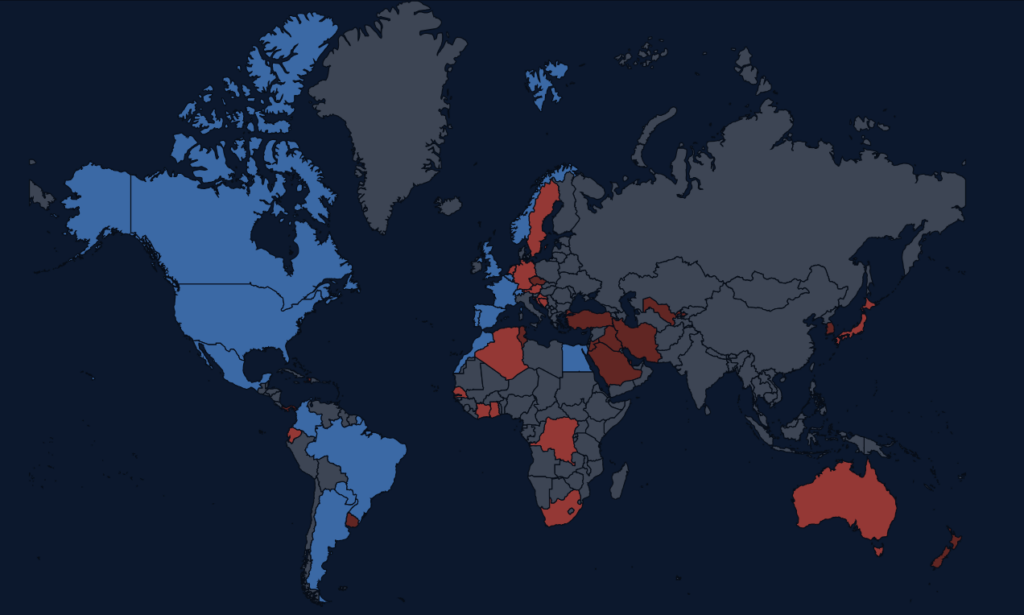

Quarterfinals
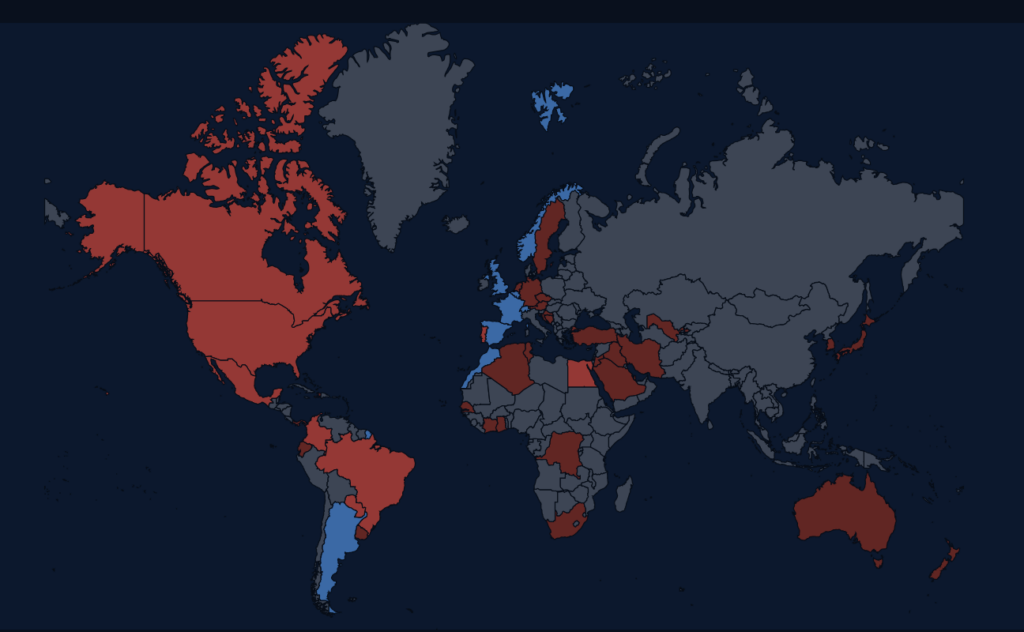

So What?
Mostly I thought it was interesting. None of this is particularly surprising; everybody who follows the game knows where the power lies. But that diagonal band of survivors from Norway through to Argentina is pretty evocative (and if Brazil had beaten Norway, it would be perhaps even more so).
I included the ELO ratings mostly to argue with my past self. Coming into the tournament I was loudly critical about adding more teams; I was convinced it would weaken the competition, and that hasn’t been the case.2 Hell, Cape Verde was one of the best things about the whole tournament.
But I was wrong because I was focusing on the wrong part of the tournament. I was wrong because the semifinal participants are more or less predetermined! There’s always one surprise addition; it was Morocco last cycle (which makes them less of a surprise this time around), and it’s Switzerland this time. And so there’s always a surprise departure; probably Brazil this time, but mostly because they simply didn’t play well. If you’re curious, it’s worth opening the app and exploring where the Brazilian team plays their soccer (hint: not enough in UEFA Champion’s League).
I’m still digesting this, but I thought it was interesting and perhaps others might also.
- With deep thanks to my friend @constipated_squirrel_says_what, who is my most active – usually only – commenter here. He made the map first and encouraged me to integrate it into the app. ↩︎
- However, I am still strongly critical of the way it was done; 48 teams in the group stage meant way too many games in way too little time, and served to make the group stage pretty meaningless. Perhaps if we want to expand the tournament, do it as a pre-competition play in – sixteen teams in four groups, winners of each group proceed to the big stage. It’s not that different from what happens now, except the last stages of qualification become formal and global. I’d look forward to watching that. ↩︎
